
Survival guides · First Aid & Health
CPR — Adult
ACT NOWSomeone collapses, won't respond, and isn't breathing normally. Gasping counts as not breathing.
-
Check, then start
- Make sure it's safe to reach them.
- Tap their shoulder and shout "Are you okay?"
- No response, not breathing normally? Start CPR now.
- Someone with you? One calls 911 — or runs for help if there's no service — and gets an AED while you start.
- Alone? Call 911 on speaker if there's service, and start. No service? Shout for help — never stop compressions to go look for it.
- No signal at all? Have someone dial 911 anyway — iPhone 14 and newer offer to text 911 by satellite. They'll need to be outside, clear view of the sky.
- On the line? Stay on speaker. The dispatcher will coach you and can find the nearest AED.
- Possible overdose? Give naloxone if you have it — never instead of compressions.
-
Hands on the chest
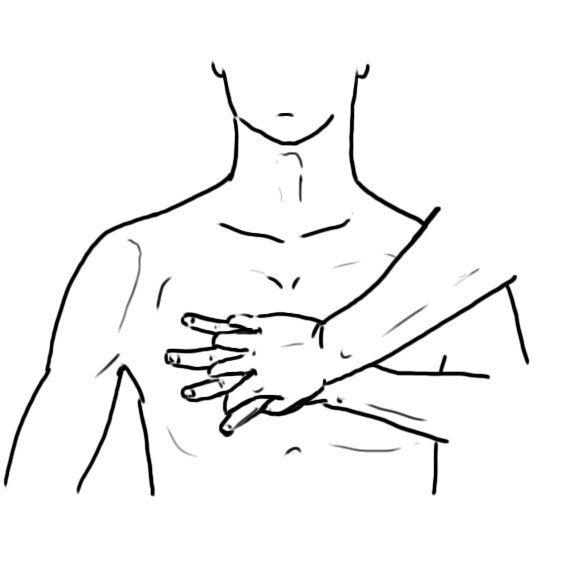
- Heel of one hand on the center of the chest — lower half of the breastbone.
- Other hand on top, fingers laced.
- Arms straight. Shoulders right over your hands.
-
Push hard and fast
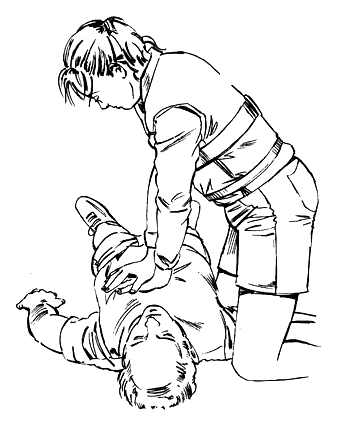
- 2 inches deep — no more than 2.4.
- 100–120 a minute — the beat of "Stayin' Alive."
- Let the chest come all the way back up.
- Cracked ribs happen. Keep going.
- Don't stop until an AED is ready, help takes over, or they breathe normally.
-
Use the AED the moment it arrives
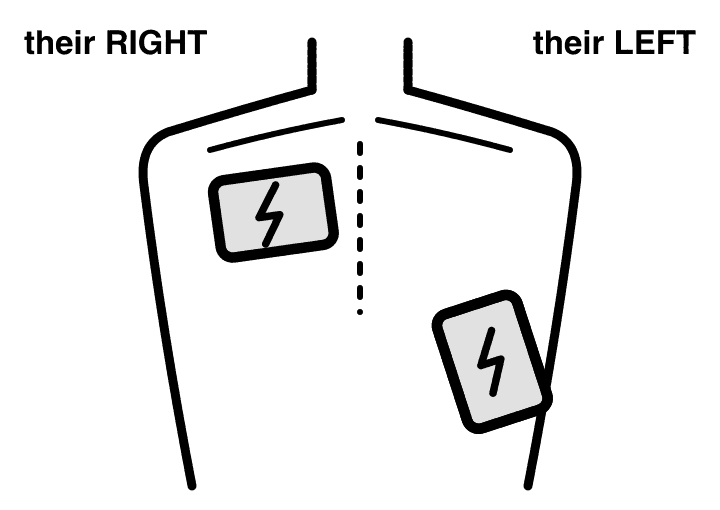
- Turn it on. It talks you through everything.
- Keep pushing while someone bares and dries the chest and sticks on the pads, as pictured.
- "Stand clear" means nobody touches them. Shock if it tells you to — then straight back to compressions.
- No shock advised? Keep pushing anyway.
- Leave the pads on. Follow its prompts until help takes over.
Why
An AED will not shock someone who doesn't need it, so you can't hurt them by trying. It re-checks the heart about every two minutes on its own — don't stop to check for a pulse. 911 centers can look up registered AEDs near you. Hands-only CPR can double or triple a person's chance of surviving, and you don't need to be certified.
Sources: American Heart Association (2025 Guidelines for CPR and ECC) · American Red Cross First Aid Guidelines
General information to help in an emergency — not a substitute for training or professional care.
← All survival guides